


In the early 1930s when aviation was still finding its footing between daring experimentation and practical application. An unusual aircraft emerged that quietly helped shape the future of maritime rescue and amphibious flight. The Douglas Dolphin, built by Douglas Aircraft Company, was neither a mass-produced airliner nor a war hero of global conflict. Instead, it carved out a unique legacy as one of the first aircraft to prove that airplanes could save lives at sea.
From Luxury Dream to Practical Machine
The Dolphin’s story begins with ambition and unfortunate timing. Originally designed as a luxurious “flying yacht” known as the Sinbad, the aircraft was intended for wealthy buyers who wanted to travel in comfort between coastal destinations. But the onset of the Great Depression quickly erased the market for such extravagance.
Douglas adapted. The Sinbad evolved into the Dolphin, a more practical amphibious aircraft capable of operating from both land and water. Though only 58 were built, the design found new life in government service, where its versatility proved invaluable.
A New Kind of Aircraft
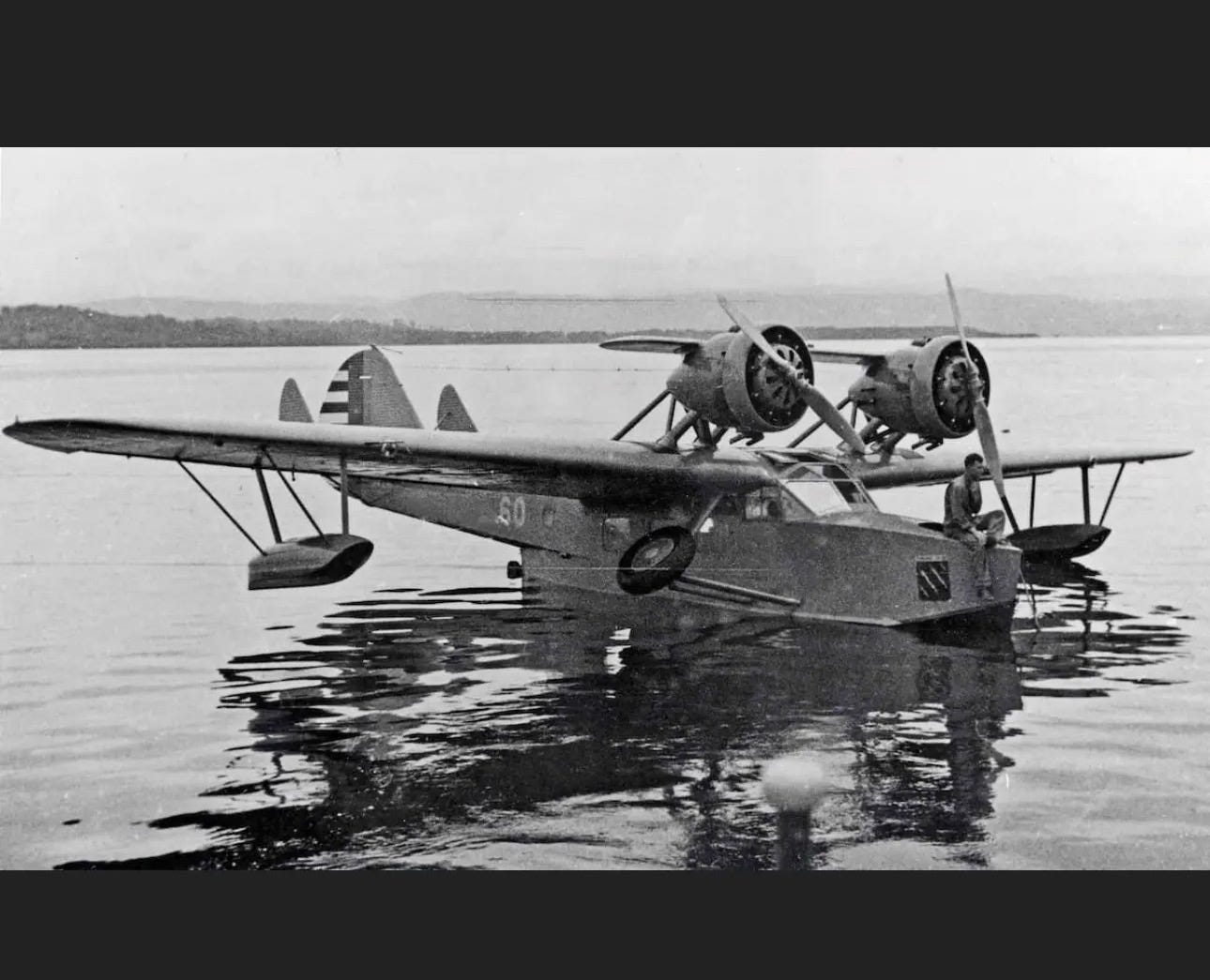
The Dolphin stood out for its distinctive and purposeful design. It featured a high wing, twin radial engines mounted above the fuselage to avoid water spray, and a boat-shaped hull that allowed it to land directly on open water. Retractable landing gear gave it the rare ability, at the time to transition seamlessly between runway and sea.
This combination made the Dolphin one of the earliest truly effective amphibious aircraft, capable of roles that few others could fulfill.
The Rise of the “Flying Lifeboat”
It was with the United States Coast Guard that the Dolphin found its calling.
Throughout the 1930s, Coast Guard Dolphins conducted search and rescue missions that would help define an entirely new concept: the airplane as a first responder. These aircraft flew far offshore, often in poor weather, to locate ships in distress, missing vessels, or survivors stranded at sea.
In some cases, Dolphins arrived hours before surface ships could reach the scene. They dropped emergency supplies, coordinated rescue efforts, and when conditions allowed, they landed directly on the water to retrieve survivors. For those pulled from the ocean, the Dolphin was more than an airplane; it was a lifeline.
These missions were not always widely publicized, but their impact was profound. The Dolphin demonstrated that aircraft could dramatically extend the reach and speed of rescue operations, influencing the future of Coast Guard aviation and maritime safety worldwide.
Service Beyond Rescue
While search-and-rescue defined its legacy, the Dolphin was also used for a variety of other roles. It served with the U.S. Navy and Coast Guard as a transport and patrol aircraft, and in civilian life it carried passengers on short coastal routes, including flights to island destinations.
One particularly notable chapter involved Franklin D. Roosevelt. A Dolphin was acquired for his use, marking the first time an aircraft was designated for presidential transport. Though Roosevelt never flew aboard it, the effort represented an early step toward the development of dedicated presidential aviation.
A Rare Survivor
Despite its capabilities, the Dolphin was a victim of circumstance. The economic realities of the 1930s, combined with rapid advancements in aircraft design, limited its production and shortened its operational life. Most Dolphins were eventually scrapped, lost in accidents, or dismantled for parts.
Today, only one complete example survives. It is preserved at the National Naval Aviation Museum, where it stands as a rare reminder of a transitional era in aviation history.
Legacy of an Overlooked Pioneer
The Douglas Dolphin never achieved the fame of later flying boats or wartime aircraft. Yet its importance lies in what it proved. It bridged the gap between luxury experimentation and practical utility, showing that amphibious aircraft could serve real-world needs especially in saving lives.
More importantly, it helped establish a concept that is now taken for granted: that aircraft can be among the fastest and most effective tools in search and rescue operations.
In that sense, the Dolphin’s legacy lives on every time a rescue aircraft heads out over open water. It may be largely forgotten, but its impact still echoes across the skies and seas it once served.